skip to main |
skip to sidebar
The path to hell is paved with good intentions. The best of intentions seem to lie behind a proposal by Montazerhodjat, Weinstock, and Lo that chronically sick people should be able to take out health-contingent loans to finance curative treatments instead of paying repeatedly for short term medicine. The logic behind the suggestion is undeniable: the patient’s financial outcome and health outcomes look better under the hypothetical loan-based model. Just like a renter who prefers to take out a mortgage to buy a home than rent indefinitely, the patient exchanges a perpetual stream of payments for a lump sum of debt that they can eventually pay off. In addition, the loan they propose is contingent on the person’s continued health—if the cure doesn’t work the loan is written off. This aligns the incentives of the pharmaceutical vendor with that of the patient: both want to see the patient permanently cured. In the long-run, if these loans were widely available, more R&D would be directed towards curative medicine rather than temporary or partial treatments.

Similar rumblings can be heard in the discussion around financing higher education. The idea of a “human capital contract” is that a prospective student might agree to pay a percentage of their future income in exchange for having their tuition fees paid up front. It is a financial model that replaces the concept of student debt with one of student equity: by sponsoring my university studies you are “buying shares” in my future prospects. The idea is analysed in depth by Miguel Palacios in his 2004 book “Investing in Human Capital.” Palacios rightly points out that there are ethical and practical dilemmas involved. On the ethical side, the concept of equity in a human being has echoes of slavery or indentured servitude, and no matter what guarantees the sponsor makes to preserve the recipients’ freedom, there will be a risk of exploitative or coercive behavior by sponsors to ensure the recipient takes a higher paying job. Also, the idea of indefinite contracts is rather unpalatable. On the practical side, the proposed contracts suffer from severe problems of adverse selection and moral hazard.1 A more palatable half-way house between plain vanilla loans and human capital contracts is the “income-contingent loan,” which you pay back with some percentage of salary over a given threshold. Income-contingent loans typically include a capped repayment period, after which the remaining balance is written off.
The health-contingent loans to pay for medical treatment and the income-contingent loans to pay for education are part of a broader class of “human capital loans,” which are used to build up the intangible value embodied in the person themselves rather than their tangible assets. They also belong to a category I am calling “X-contingent loans” since the amount that gets repaid depends on how future events unfold. As the two examples suggest, X-contingent loans might provide a route to finance things that increase quality of life but which traditional financial products don’t work for. They may be one of the defining financial innovations of the 21st century, which unlock tremendous value for poor people, whose "liquidity constraint" prevents them from accessing healthcare or higher education. They also pose substantial risks, which are not always acknowledged by their proponents. I will highlight two.
First, we consumers are not good at judging the costs and benefits of complicated financial products. The concept of compound interest is not intuitive, meaning we struggle to deal with our long-run finances, even when consumer financial products have deterministic payment profiles. Once you add “contingencies” into the mix, we become pretty hopeless at judging what is a good deal. Corporations have statisticians on staff to compute probabilities of myriad events occurring, and even they were caught out by the correlated decline in house prices that precipitated the financial crisis of 2008. As everyday consumers we have only the coarsest sense of what the future holds; we make decisions based on gut feel, not on probabilities. When it comes to complicated financial products we are easily misled, and even when a vendor is being transparent (the exception, not the rule these days), we tend to make poor choices. When we make poor choices, we lose out, and ultimately markets may fall apart completely.
To emphasize this point, consider two different consumer financial products with “embedded options.” In the US, in contrast to many other developed nations, most mortgages are fixed-rate. However, mortgage borrowers are typically allowed prepay on their loan. If the prevailing interest rates goes down, it becomes attractive to refinance a mortgage at a lower rate. Mortgages have an implicit call-option on the part of the borrower, which creates “prepayment risk” for lender, vastly complicating the valuation of pools of mortgages that make up mortgage-backed securities. Mortgage providers enlarged the level of complexity by issuing mortgages with attractive starting rates, but complicated tiers of future payments (and some mortgage issuers simply engaged in outright fraud). The widespread, correlated defaults on mortgage payments from 2007 were an unforeseen consequence of the products’ complexity. The US market for automotive leasing also has options embedded by law in the leases: at the end of the lease the lessee can decide to either purchase the car at its pre-specified residual value, or to return it to the lessor.2 Monthly lease payments amortize the difference between the purchase price and the residual value, so lessors can offer attractive deals by using optimistic estimates of residual values. In the early 2000s, this market fell into dysfunction because lessors had systematically overestimated the residual values of vehicles, and far more vehicles were returned to lessors than anticipated. Many banks exited the industry, sustaining hundreds of millions of dollars in losses.
The second big problem with X-contingent loans is that prices respond to the quantity of money available to buy something. This is a fairly intuitive result of the forces of demand and supply; when buyers have more money available, this raises the effective level of demand. This is why central banks lower interest rates to stimulate aggregate demand in the economy, but raise interest rates if excess demand is causing inflation. When we consider introducing a form of credit that is specific one particular consumer good, we should expect a high rate of inflation in the prices for that good. The clearest real-life example is (again) the market for property, with the expansion of credit in the form of larger and easier-to-obtain mortgages. The long-run trend to allow people to borrow increasingly larger multiples of their income has sent property prices skyrocketing. This effect is already in evidence in the US market for higher education, in which tuition fees have risen at roughly three times the rate of inflation, hand-in-hand with the expansion of student loans to pay these fees.3 We can clearly anticipate that if health-contingent loans expand the credit available to pay for treatments, their prices (if left unregulated) will likely rise. This is compounded by the highly inelastic demand for health: people will pay for health at whatever price is asked—it is, after all, a matter of life or death.
All this considered, what can we do? My inclination is to treat X-contingent loans very cautiously. We should move forward slowly rather than rush to welcome this tempting looking new market. And we should consider centralized government control. If we compare the situation with student loans in the US and the UK, neither is perfect, but the presence of private student debt in the US makes for a far more dysfunctional system than in the UK, which already runs on income-contingent loans. Mortgages have made home-ownership a realistic possibility for millions, but have also come close to sinking the global financial system. If we can learn from past mistakes, maybe with X-contingent loans we can expand the benefits of access to healthcare and education, in a humanistic rather than an exploitative way.
_________________________________
1 In this context, adverse selection occurs because people who expect to earn a lot in future will prefer to take out loans to finance their education, while people who expect to earn less will opt for HCCs. Moral hazard occurs because a person has a lower incentive to take a higher paying job if some percentage of that extra income gets paid to their sponsor.
2 This example is taken from the academic article "Big Losses in Ecosystem Niches: How Core Firm Decisions Drive Complementary Product Shakeouts" by Lamar Pierce (2009).
3 We should not be surprised that bad actors arise to exploit the system, a story that John Oliver recounts with aplomb.
Human beings are not particularly good at thinking about probabilities. The last several decades of research in psychology and behavioral economics have unearthed an array of cognitive biases in how we reason about uncertain events. For example, we are prone to misinterpret the results of diagnostic tests, by failing to account for the base rate of a disease in the population. This has enormous implications in the medical field, and may be leading us to over-diagnose and over-prescribe treatments for a variety of illnesses.
One of the foundational theories in behavioral economics is prospect theory, formulated by Daniel Kahneman and Amos Tversky. This theory is most well known for the observation that humans interpret losses as more consequential than gains of the same magnitude. Thus, simply changing the framing of a decision from a ‘gain frame’ to a ‘loss frame’ can make people much more averse to taking risks. In this blog post I want to focus on another prong of prospect theory: the over-weighting of rare events.
Prospect theory suggests—and experimental evidence supports—the idea that people ‘filter’ probabilities: we act as though very low probability events are more likely than they really are (and as though high probability events are less likely than they really are). This helps explain why people fret so much over low probability dangers such as shark attacks and ignore more mundane risks such as accidental falls. It also helps explain why people gamble money on lotteries even when the odds of winning are very slim, and the expected return is negative.
What has this got to do with valuing a start-up? The conventional way to value a company is to make a forecast of its future cash flows, then discount these back to find the ‘net present value’ of its future income. Alternatively, as a heuristic we can apply a multiplier to its earnings based on accepted valuations of other companies. Neither of these works for an emerging venture with a novel business proposition (i.e. your typical Silicon Valley start-up). The future prospects of such a company are shrouded in uncertainty.
Instead of trying to establish the likely path of a given venture’s future cash flows, investors—usually venture capitalists—take a portfolio approach. They pick companies they think will have a chance at becoming massively successful, but realize that many will fail to do so. Each investment is a bit like a lottery ticket. In the classical VC portfolio model, roughly one investment in ten would need to exit at a blockbuster valuation for the overall fund to make a decent return on investment.
In the present wave of technology venture activity, three key things are being done differently to the past. First, the definition of a ‘massively successful exit’ has inflated: ventures now aspire to be ‘unicorns’ with a billion-dollar valuation. Second, investors are spreading their money out, investing in a larger number of ventures. This is most visibly true in accelerator programs, which provide large numbers of nascent ventures with seed funding and mentoring in return for a small equity stake: they explicitly rely on a scattershot approach. Instead of a VC picking ten investments and hoping for two or three large exits, the accelerator approach is to invest in a hundred startup teams and hope for one unicorn. Third, more ventures are staying private for longer, rather than go public through an IPO. As described in this FT article, this allows them to effectively manage their headline valuation figure by giving new investors guaranteed financial returns (risking, in the process, the equity of preceding investors). This prevents negative opinions of the venture’s prospects from being incorporated in its valuation.
And so we have a perfect storm in which valuations are based on someone’s estimate that a given venture will become a unicorn, and—according to prospect theory—they are biased to overestimate how likely this is. For every thousand startups, maybe one of them will be hugely successful, but all of them might be valued as if they have a one-in-a-hundred chance of this success. This is a problem. More fundamentally, we are dealing with such small probabilities that we can easily get them very wrong.
Earlier in the year I considered a few possible mechanisms by which a hypothetical technology bubble might burst. Here, I’ve described one psychological factor that might be behind high startup valuations in the first place. It’s also worth noting that prospect theory can explain rapid changes in investor sentiment. If prices start falling—for example if a bubble shows signs of bursting—investors can switch from a gain mindset to a loss mindset, and immediately become much more risk averse. I hope this doesn’t happen, because the present wave of entrepreneurial activity is generating a lot of innovation. But a wise investor or entrepreneur should be aware that the tide might turn in the near future, and plan accordingly—or risk getting swept away when it does.
We are in the midst of the greatest economic upheaval since the industrial revolution. This is the premise of The Second Machine Age by Erik Brynjolfsson and Andrew McAfee, a book discussing the economic implications of present day technological trends. It is an excellent piece, which touches on several topics I have previously explored in this blog, from the trends towards scalability and the consequent ‘winner takes all’ market dynamics, to the deep challenges the information age poses to the measurement of economic growth.
The book has a compelling overarching theme: technology is driving two forces, one positive
for society and one negative. On the one hand technological change is generating an enormous bounty of economic growth. On the other hand, it is also driving increasing spread between rich and poor, and these economic faultlines could undermine the basic fabric of society.
Behind both bounty and spread is the rise of machine intelligence. Machines can take on ever more tasks, even ones that a decade ago we thought would be impossible to automate. The poster child for this is driverless cars. Technology experts used to think driving is so complex that humans would always have an advantage over computers, but the exponential progress of technology has rendered this prediction wrong. Google has been testing driverless cars for several years and Tesla’s Autopilot mode has already made automated vehicles a commercial reality.
One of the discussions in the book I find most compelling is on the subject of technological unemployment. At least since the days of the Luddites, the spectre of machines taking our jobs has worried generations of workers and commanded much attention in social and political science. The prevailing wisdom in the contemporary economics establishment is that technological unemployment is, indeed, a phantom, one we need not worry too much about. The argument goes as follows: while technological change may tear down old industries, it opens up new possibilities, and through the process of entrepreneurial action old ‘factors of production’ can be redeployed to productive uses. People whose skills become obsolete can learn new skills, they just need to be flexible about the type of work they are willing to do.
Brynjolfsson and McAfee make a compelling case that technological unemployment is a legitimate concern. They point to three main reasons:
1.) Rates of change
The argument against technological unemployment rests on the idea that people can adapt and find employment in growth industries. This reasoning holds as long as the rate of adaptation is faster than the rate of technological change. Historically this has been the case: despite the gales of creative destruction blowing strongly, society has adapted.* However, Brynjolfsson and McAfee point out that just because a trend held for 200 years doesn’t mean it holds forever. The rate of technological change has been increasing; can we expect that individuals and the institutions of society will adapt at an ever increasing rate as well?
2.) Elasticity of consumption
Another part of the argument against technological unemployment is that gains in productivity lead to lower prices, which in turn stimulate a higher volume of consumption. This assumption – that in aggregate the long-run “elasticity of demand” is approximately one – would provide an adjustment mechanism if technology continues to raise productivity. The authors point out that if this assumption is wrong, then economic growth would eventually come grinding to a halt.
A corollary of the elasticity of consumption argument, not addressed by the authors, is that it relies on prices going through periods of deflation. Deflation occurred in 1930s US and 1990s Japan, and might have occurred in the 2008-2012 Great Recession if it were not for the unconventional monetary policy of central banks around the world. Avoiding deflation has been celebrated for averting a potentially disastrous depression. But if prices are never allowed to fall, we lose one of the economic mechanisms for adjusting to technological change. I don’t have a clear cut answer to this dilemma, but I would like to see a few more economists discussing this issue.
3.) Floor on wages
This argument is presented with a thought experiment:
“Imagine that tomorrow a company introduced androids that could do absolutely everything a human worker could do, including building more androids. There’s an endless supply of these robots, and they’re extremely cheap to buy and virtually free to run over time.”
In this hypothetical end-game scenario, the equilibrium wage for human labor falls to zero. Managed well, we’d be in a Utopia, managed poorly – dystopia.
This is no mere parlor game. The authors also point out that in a digital economy, in which the output of superstars can be freely reproduced, the equilibrium wage for non-superstars is already zero, or close to it. These non-superstars look for work in other sectors, pushing wages down there. Eventually, “If neither the worker nor any entrepreneur can think of a profitable task that requires the worker’s skills and capabilities, then that worker will go unemployed indefinitely.”
Something implicit and horrifying in this last mechanism is that the free market’s solution to an oversupply of workers is starvation. When demand for a typical material good shrinks, its price falls. The supply side of the market adjusts by producing less of it. But when demand for labor shrinks, its price (i.e. the wage rate) may fall, but this doesn’t translate to a lower supply of labor (i.e. a lower population), except through violent means.
The book concludes that governments need to take action in order to make the most of technology’s bounty while minimizing the spread, or at least mitigating some of its worst consequences. Amongst other things, the authors advise greater investment in education (“higher teacher salaries and more accountability”), more support for entrepreneurship, more investment in science, and more progressive taxation, especially raising taxes on those with superstar levels of income.
The authors join a growing minority of commentators who view a Basic Income – a guaranteed minimum income paid by the government – as the best solution to rising inequality.** In the long run this might be the only feasible way to organize an economy which only requires a small, skilled minority to generate most of its economic output.
Technological change bears the potential to benefit everyone, but it also has the potential impoverish the majority while enriching a few. This is not some science fiction future – this is starting to happen today. The warning bells are sounding and now some wise leadership will be needed to steer the ship through the coming storm.
______________________________
* Though not without spells of pain and suffering along the way.
** I find it quite noteworthy that this possibility is now part of mainstream discourse, and I found it even more surprising to learn that it almost became a reality under the Nixon administration
Tech company valuations are through the roof right now, and many people have been questioning whether we are presently living through a tech bubble. In this blog post I set to one side the thorny question of whether we are in a bubble or not. Instead, I go through a thought experiment: I assume that we are in bubble, and play out a few scenarios for ways in which it might burst. Here are my top three:
Scenario 1: A Rising Star Falls
Present tech valuations are only warranted if you believe in the fundamental quality of their management teams. A high level of future growth is already priced into current valuations. This will only be attainable if they can expand their horizons, for example by expanding internationally. Such expansion puts a lot of pressure on organizational infrastructure. It is hard for a Silicon Valley-based headquarters to ensure that every local subsidiary maintains the quality standards they aspire to globally. Businesses who scale up slowly often have problems; those doing it at an accelerated pace (such as Uber) are even more likely to trip up. If too many local scandals mount, the managerial quality of the whole enterprise will get called into question, as will its valuation. The bold, fresh-faced management team will suddenly look hapless and inexperienced, flailing in the midst of a crisis, or riven by internal politics.
We only need look at Enron to see the risks that free-wheeling growth can expose an organization to. Now I am categorically not saying that every tech start-up is an Enron. waiting to happen. What I am saying is that it could take just one high-tech corporate implosion to cast doubt on all the others. And once investors start to doubt the fundamental managerial quality of these tech ventures the game is up for the whole pack. Let me be totally clear: this line of argument is about perceptions. In the context of venture capital investments ‘risk’ is highly subjective, in other words it is a matter of perceptions. One dramatic fallen star could change the perceptions of investors about the risk of all the other stars, leading to the tech bubble deflating.
Scenario 2: The Advertising Pyramid Collapses
Many tech ventures rely on advertising as their main (or sole) source of revenue. Advertising is the bedrock of the tech sector, worth an estimated $43bn in 2013. It has allowed the industry to evolve in such a way that consumers expect services to be free. Take it away and those apps and websites suddenly don’t look like such appealing investments anymore.
Where do the pressure points lie when it comes to advertising? I see two potential sources of strain. First is the question of the proportion of advertising accounted for by tech companies and websites themselves. Apps tend to display adverts for other apps; websites display adverts for other websites. Webmasters buy ads to drive eyeballs to their site, where they hope people will click on ads. When this kind of behavior occurs, the online sector is feeding on itself – it is autophagous. Here we are in classic bubble or pyramid territory. The pyramid is sustained as long as it draws more people in to play the game, but once it is revealed to be hollow, it vanishes at once. I don’t have data on how much advertising is of this nature – so I can’t truly judge the extent to which this is a problem. However, just from my personal experience of browsing the web it appears that a lot of advertising is of this autophagous nature.
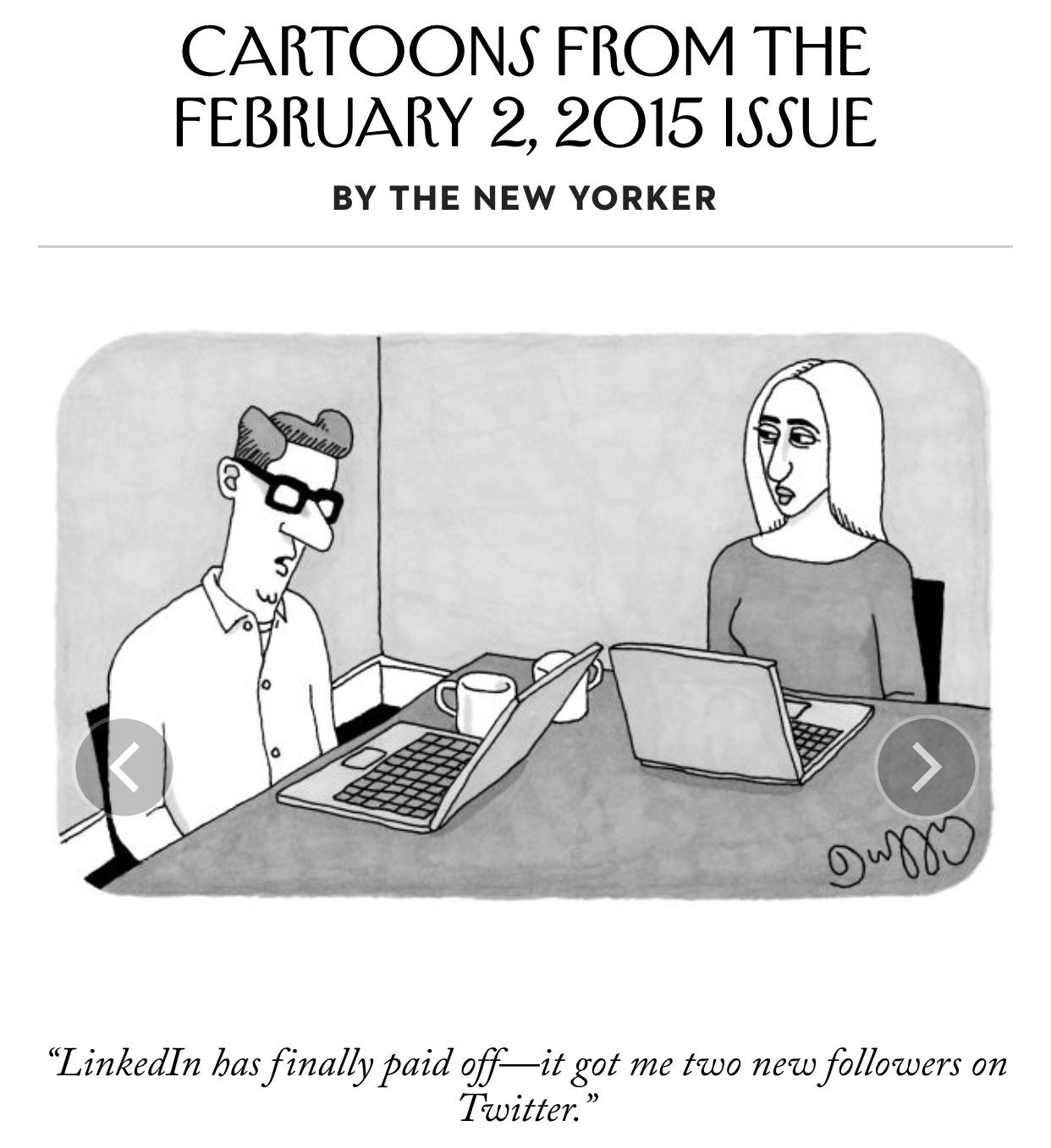
The second pressure point is the difficulty of measuring the return on investment (ROI) of online advertising. Web-based advertising platforms throw off a lot of data. The funnel from views-to-clicks-to-purchases can be tracked, so in principle a marketing manager can attribute a given online sale to a given online advert. However, things are far from simple. A customer who clicked through a pay-per-click advert may have still made exactly the same purchase even if the advert hadn’t been there. And a lot of online advertising is bought primarily to promote offline sales (think of, e.g., car adverts). However the effects on offline sales are much harder to track. Interestingly, while online advertising opens up the possibility of using randomized experiments to measure the effect of adverts, research so far has found that the effect size is so small it is hard to reliably measure from a statistical standpoint.
The upshot of this: the online advertising industry, while huge, is not yet in a long-term, stable equilibrium, and it’s not clear whether the stable market size will be larger or smaller than the market that exists now.
Scenario 3: Silicon Valley Disrupts Itself
To disrupt an industry is the bold aim of many of Silicon Valley’s start ups. It typically entails finding a way to deliver the same service the industry presently delivers but at a fraction of the cost or at a step-change improvement in quality or convenience.* It is often said that to disrupt you need to offer something 10x better than what presently exists, in order to overcome people’s inertia and lock-in with present systems.
The industries targeted for disruption are typically of the staid, old-school variety, perhaps dominated by some entrenched rentiers – think of Uber disrupting the taxi / car industry, or TransferWise disrupting the foreign remittance industry. The narrative of disruption underlies the massive valuations these companies receive. To take Uber, for example, in debates about its valuation have moved from comparisons with the entire global market for taxi services to discussion about how it might act as a subtitute for car ownership.
But there's no particular reason only old industries are vulnerable to disruption. It is perfectly conceivable that one of the current tech giants itself gets disrupted. People appear pretty locked-in to social media platforms such as Facebook, but if a company were to come along with an offer 10x better than one of these, it is easy to see customers switching. And, in fact, many already did: in the last few years plenty of people switched from Facebook to Twitter or Instagram as their primary social media feed, and in future something even better than either of these may come along. Well aware of this fact, Facebook paid a billion dollars for Instagram and $22bn for WhatsApp primarily because of the threat that these businesses posed to its dominance.
I can’t predict what a social media platform 10x better than Facebook would look like, but then neither could I have predicted Facebook’s creation before it existed. And, as with Scenario 1, it only takes one giant to fall asunder for many of the others to lose their appeal to investors.
So, there we have it, three scenarios for how the tech bubble might burst. Which do you find the most plausible? What other scenarios sounds realistic? Answers in the comments below!
_____________________
*Note: this is a fairly colloquial definition of disruption. It is a somewhat warped version of its original academic usage by Clay Christensen, which referred to creation of new performance dimensions for emerging market sub-segments that eventually become large markets in their own right. Here, the colloquial meaning is the one I intend.
I wrote the following paragraph on 3rd November, 2013, shortly after a big rise in Google's share price. I never got round to expanding it into a full post. This week the Google Glass developer program was put on hiatus so it seemed like an apt point to dig it up.
Google has made the news this week for its share price reaching record highs. I’ve been observing the company keenly for many years and greatly admire the technical prowess and creativity of its employees and the vision of its founders and leaders. In the past the company has pioneered a vast array of internet services and is one of the chief reasons why much of what is online is available for free (including this blog). Now it looks as though they plan to be a pioneer in the hardware world, and this is likely to be the greatest challenge they will ever face. There are numerous possible miss-steps, and above all I want to highlight the risk that, while they have mastered technology, they lack an understanding of how it is socially adopted and accepted. This will leave some of their greatest innovations – Google Glass and driverless cars – down a rocky path, with a real chance of outright rejection by society.
“There’s a reason for the 21st century. Not too sure, but I know that it’s meant to be.” - The Red Hot Chili Peppers
The work of James Martin was brought to my attention when I read his obituary after his passing on 24th June, 2013. One of the UK’s most influential computer scientists, and probably its foremost futurologist, his early work1 foresaw much of what would unfold as IT evolved and revolutionized society. He helped to create the digital revolution through his work on information engineering at IBM, as well as through several companies he founded, amassing considerable personal wealth along the way. His fascination with the future led him to deploy this wealth by founding The James Martin 21st Century School at the University of Oxford and dedicating the latter part of his life to understanding and communicating the challenges facing humanity.

'The Meaning of the 21st Century' contains his reflections on the challenges facing humanity over the next hundred years, and some of the possible solutions. Published in 2006, it is unabashedly subtitled 'A vital blueprint for ensuring our future.' It weighs in at over 500 pages, and I read it gradually over the summer of 2014. Its expansive themes make it sometimes heavy going. I have come to agree with many of the accolades it receives on the inside cover (‘A wonderful book… a privilege to read.’ ‘A fire bell warning.’ ‘ a short course on the most pressing mega-problems of the new century.’) It is somewhat daunting to try and distill the book into a blog post sized text. In this post I focus on the Grand Challenges he identifies facing humanity2. Martin touches on a great many over the course of the book, which I find helpful to arrange in three broad categories: (1) ecological and environmental challenges; (2) social and institutional challenges, and (3) technological challenges.
Ecological / environmental challenges
Ecological / environmental challenges are now broadly recognized and widely discussed. Our ecological / environmental challenges include: water scarcity, deforestation, topsoil erosion, soil salination, loss of biodiversity, depletion of marine life, and global warming (with its sub-problems of: ice caps melting, ocean current perturbation, sea level rising, extreme weather events). Many of these contribute to the possibility that we will reach our agricultural limit, a thesis famously put forward by Malthus. Many would say it has since been discredited, but just because it hasn’t happened yet, that doesn’t mean it never will. Some of the ecological problems receive more attention than others; ultimately any of them could spell disaster for the functioning of society. Also, the degree to which these problems are inter-related is probably underestimated. For example deforestation has a cluster of knock-on effects, it (i) reduces biodiversity, (ii) releases greenhouse gases, (iii) reduces the rate at which CO2 is absorbed, (iv) leads to topsoil erosion, (v) contributes to desertification. When we realize that tackling one cause can stem many effects, the rationale for taking action increases considerably.
Social / institutional challenges
Social / institutional challenges are beginning to receive attention, but mostly to their symptoms, i.e. the latest flare-up of unrest or the latest act of terrorism. Relatively little attention is paid to their root causes. Social challenges include: population growth, poverty, religious extremism, terrorism, social unrest, rising inequality, illiteracy, bureaucratic paralysis, regulatory capture, public service mismanagement, and institutionalized short-termism. Again, these are intertwined in various ways, for example rising inequality is a catalyst of social unrest, extremism and terrorism, and also leads to regulatory capture and political stasis due to the concentration of power in the hands of an entrenched plutocracy.
Technological challenges
Thirdly, technological challenges are probably the ones most overlooked in the mainstream discourse, and it is here that Martin’s insight adds the most to the conversation. He takes a critical eye and looks at technology not as an unalloyed benefit but also as a threat – potentially a grave one – to the wellbeing of humanity. Technological challenges include: ease of access to weapons of mass destruction (in particular nuclear or biological weapons), computer intelligence, risky scientific experiments, hormone disruptors in the water supply, ethics of transhumanism and genetic engineering, new destructive weaponry (e.g. nanotechnology, robotics, and new bio-weapons), and rising scalability contributing to unemployment and inequality. Martin stresses that computer intelligence is ‘non-human-like’ so we should not expect computers to suddenly gain consciousness in the conventional sense. However, the Singularity still poses a threat, as intelligent computers would be inherently unpredictable:
‘Technical controls will be needed for computing, perhaps in the form of hardware design, to ensure that when computers become incomparably more intelligent than we are, they act in our best interests.’ (p.287)
Relationships between the three areas
One of the book’s great strengths is that it looks at how all three forces interact. For example, Martin (correctly) predicted a rise in Islamic extremism facilitated by the spread of internet technologies for recruitment purposes. Long before the rise of ISIS, he framed these comments in terms of Al Qaeda:
'Al Qaeda’s recruiting video is on the Web… Osama bin Laden’s rhetoric is highly persuasive to many young Muslims, telling them that God want them to help end Islam’s humiliation. Right now [i.e. 2006], most of the vast target audience for this message doesn’t yet have the ability to see Web-delivered TV. As the technology spreads, this means of recruitment will reach far more potential volunteers.' (p.342-343)
Martin feared that technological advances will make weapons of mass destruction accessible to terrorists. Drawing on the work of Graham Allison, he saw a high probability that we will see nuclear terrorism sometime in the 21st Century.
Another highly inter-connected challenge is population growth. At its heart, population growth is a social issue, with fertility rates highly dependent on a country’s level of economic development. But population growth has enormous consequences for the environmental and ecological problems (including the ultimate question of whether the planet can sustain the world’s population).
A third example is the rising scalability in production technology (a recurring theme on this blog). Scalability is facilitated by technological advances. It can increase economic output, but it also contributes to inequality, which in turn stimulates social unrest and terrorism.
A key dilemma that Martin does not really address, but which became apparent to me while reading the book, is whether ending poverty and saving the environment are compatible goals. If we could raise the living standards of the world’s population to a Western level, the damage to the environment would be untenable. Realistically, we have to find ways to make the Western lifestyle ecologically neutral (what Martin terms ‘eco-affluence’) before the rest of the world catches up to our level of development. Anything else will spell environmental disaster for all of us.
The opening chapter of the book is available at JamesMartin.com
You can follow me on Twitter: @David_Clough1
___________________
1 Including 'The Wired Society' in 1977 and 'Technology's Crucible' in 1987
2 In chapter 13, Martin presents a list of 17 challenges, but these are not exhaustive of the many challenges he covers elsewhere in the book; my three-bucket structure is hopefully more digestible. In future I plan to write a separate post about the solutions or avenues for progress that Martin identifies.
“Innovate!” is the imperative that today’s managers most often seem to hear. So often, in fact, that it’s easy to lose sight of what that actually means. “Innovate or die” and “Disrupt or be disrupted” have become the reigning slogans in tech circles. As Gillian Tett describes in this weekend’s Financial Times, there seems to be a race on to uncover the secret recipe that can spark creativity in any organization.
In this blog post I boil down innovation to its fundamentals. The thesis is simple: innovation occurs when needs and solutions meet. In a world obsessed with technology, it is easy to overlook this simple fact. Technology puts the focus on solutions. It has raced ahead at such a pace that we have far more solutions than we know what to do with. And the needs – often the most dire, urgent needs of humanity – are going overlooked, because their solutions are not technological. The gap between our present needs and solutions is a massive deadweight loss to society, and to close it we need much more innovation to be ‘pull-driven.’ If we can transform the ‘innovation production line’ to work on Toyota-style, demand-driven principles, we might be able to solve far more of humanity’s pressing problems1.
When do Needs and Solutions Meet?
I’ll start off with two success cases. The first is borrowed from Gillian Tett’s article. Delos Cosgrove was a heart surgeon in Ohio in the early days of open heart surgery. One of the challenges he faced day-to-day was installing a ring onto the valve in a human heart to keep it in shape. The prevailing design was a rigid ring, which didn’t work very well. To quote Tett:
“Then, some years later, Cosgrove happened to spot a kind of flexible hoop that 19th-century American women used for embroidering pieces of cloth. That’s when he had his “aha!” moment: why not utilise the sewing device and apply it to human hearts to create a valve that could move with human tissue?”
As you may guess, the invention worked, the flexible hoop replaced the rigid one and became dominant. There’s doubtless a lot more subtlety to the full story, but the principle is this: a person with detailed knowledge about a particular need came across a potential solution. Once the need and solution were ‘in the same head’ as it were, the invention could come about.
The same narrative is visible in the invention of the CamelBak hydration device (an example I learned of from Eric von Hippel). The CamelBak is essentially a backpack with a polymer bag inside, filled with water, with a tube and a valve on so that you can drink from it while exercising. It has become highly popular with runners, trekkers, and cyclists (and I’ve used it myself on many occasions). It was invented by Michael Eidson, who in 1988 was a keen cyclist trying to find an easy way to stay hydrated during long-distance races. He also happened to be an Emergency Medical Technician. He improvised a device made from an IV bag in a tube sock, and it worked. The invention was possible because the need – easy hands-free hydration – and the solution – the flexible plastic ‘bladder’ of an IV bag – were known to the same person.
Organizations which specialize in product development have systematic ways to encourage needs and solutions to meet. In a typical product development process consumers’ needs are elicited using interviews, focus groups, or ethnographic methods, and then a team works on novel ways to solve the problem. The team is inter-disciplinary, so that they can combine knowledge from different domains to come up with a solution. Companies such as IDEO have carefully honed these practices and they are on the whole effective – but the types of innovations they provide tend to be those that make life a bit easier for consumers who already have pretty comfortable lives.
When do Solutions fail to match up to Needs?
Due to the innate human fascination with science and technology, we quest after new discoveries. We often make inventions first, then later figure out what to do with them. It can take decades for the uses of a new technology to become clear, and for the ‘gale of Creative Destruction’ to blow2. A great historic example is the laser: it was discovered in the 1950s by quantum physicists investigating atomic emission spectra. Its many practical applications only became apparent later, when scientists familiar with the laser noticed and acted on the connections to possible uses3. Lasers are now ubiquitous, used in barcode scanners, printers, DVD drives and hundreds of other devices. At any given time, then, there will be a stock of technologies we don’t yet know what to do with.
Technological progress adds to that stock, while the process of ‘matching’ technologies to needs depletes it. What if technological progress accelerates? Unless the matching process also speeds up, the result is a ballooning stockpile of unused solutions. This is exactly the situation I think we are facing now.
Let me provide two contemporary examples. The first is 3D printing. The technological know-how for this has been around since the 1980s. There have been commercial uses for it since the 1990s, though the sector has only taken off in the last 5-10 years. Most experts agree that the scope of 3D printing is limitless, that it will hasten in ‘The New Industrial Revolution4.’ But we are only just figuring out how to use it. Many of the early ventures in this space arose when someone with a particular need first came across a 3D printer and noticed that it might solve the need5. There is so much more to be done with 3D printers and I am genuinely excited to find out what imaginative uses people will find for them.
Another example is drones, of the tabletop ‘quadcopter’ variety. These hit the mainstream relatively recently, relying, as they do, on miniaturized electronics and lightweight materials that have only become available in the last few years. They are a solution that is begging out for a need. So far their widest use seems to be to take breath-taking videos and photographs. This is great, but there is so much more that these devices make possible, especially if we recombine them with other technologies in imaginative ways. It would seem a waste if the best we come up with is delivering parcels for Amazon.
Winning image in a National Geographic / Dronestagram photography competition
The World is Full of Unsolved Needs
A surfeit of solutions might seem like a great thing. And it would be, except for the fact that we also have an abundance of needs, needs which these technological wonders aren’t solving. I will leave it to a future post to detail the world’s challenges, when I review James Martin’s book ‘The Meaning of the 21st Century.’ For now I’ll make two observations: (1) Even the most basic technologies for the bare minimum of living standards are failing to diffuse to the third world. Simple life-support mechanisms like running water and sanitation are only available to the richer half of the world’s population. (2) The world is facing environmental / ecological catastrophe due to over-use of finite resources and our tendency to over-pollute. Both of these look like enormous needs, or clusters of inter-related needs.
In recent history we’ve relied upon capitalist market processes to match needs and solutions. These have been enormously successful in generating the kinds of innovations that make life easier and better for rich people. But unfettered capitalism provides little economic incentive to solve problems for poor people6. Similarly, it provides no economic incentive to solve ‘tragedies of the commons’ such as our environmental problems. These needs require a different approach. They also, most likely, require innovations of a social variety rather than a technological variety. Other mechanisms exist to match needs and solutions, such as innovation contests, and latterly crowdsourcing. But new ones may need to be invented.
And thus I conclude by re-iterating my main points. Innovation occurs when needs meet solutions, and this requires them to be in the same place. Most often, in the same head. There are structured ways to try and ensure this occurs, call it ‘engineered serendipity.’ There is also a tendency for technology to be viewed as an end in itself, so that we generate myriad solutions, and bumble around in the dark until we find needs that they meet. This is a great opportunity for aspiring entrepreneurs who are familiar with an under-utilized technology. But it is also, in a sense, a waste, because right now the world has so many needs that are not being met. If we could re-engineer the production line of innovation, so that it was pull-driven instead of push-driven, we might just be able to overcome the world’s greatest challenges.
____________________________
1 We might term this ‘Lean Innovation’ but I wish to avoid confusion with the term ‘Lean Start-up’ which is rather different.
2 This insight led Schumpeter to theorize about technological causes of business cycles, an often-overlooked aspect of his work.
3 One of the laser's inventor's, Charles Townes, recalls it as "a solution looking for a problem."
4 Subtitle of the book 'Makers' by Chris Anderson [the WIRED one, not the TED one].
5 See research by Scott Shane on 'Prior Knowledge and the Discovery of Entrepreneurial Opportunities'.
6 As pointed out to me by a friend, there are some notable cases of profitable ventures serving the poor by engaging in frugal or jugaad innovation, for example the Aravind Eye Care Hospital. There is, therefore, some reason for optimism.


 Posts

